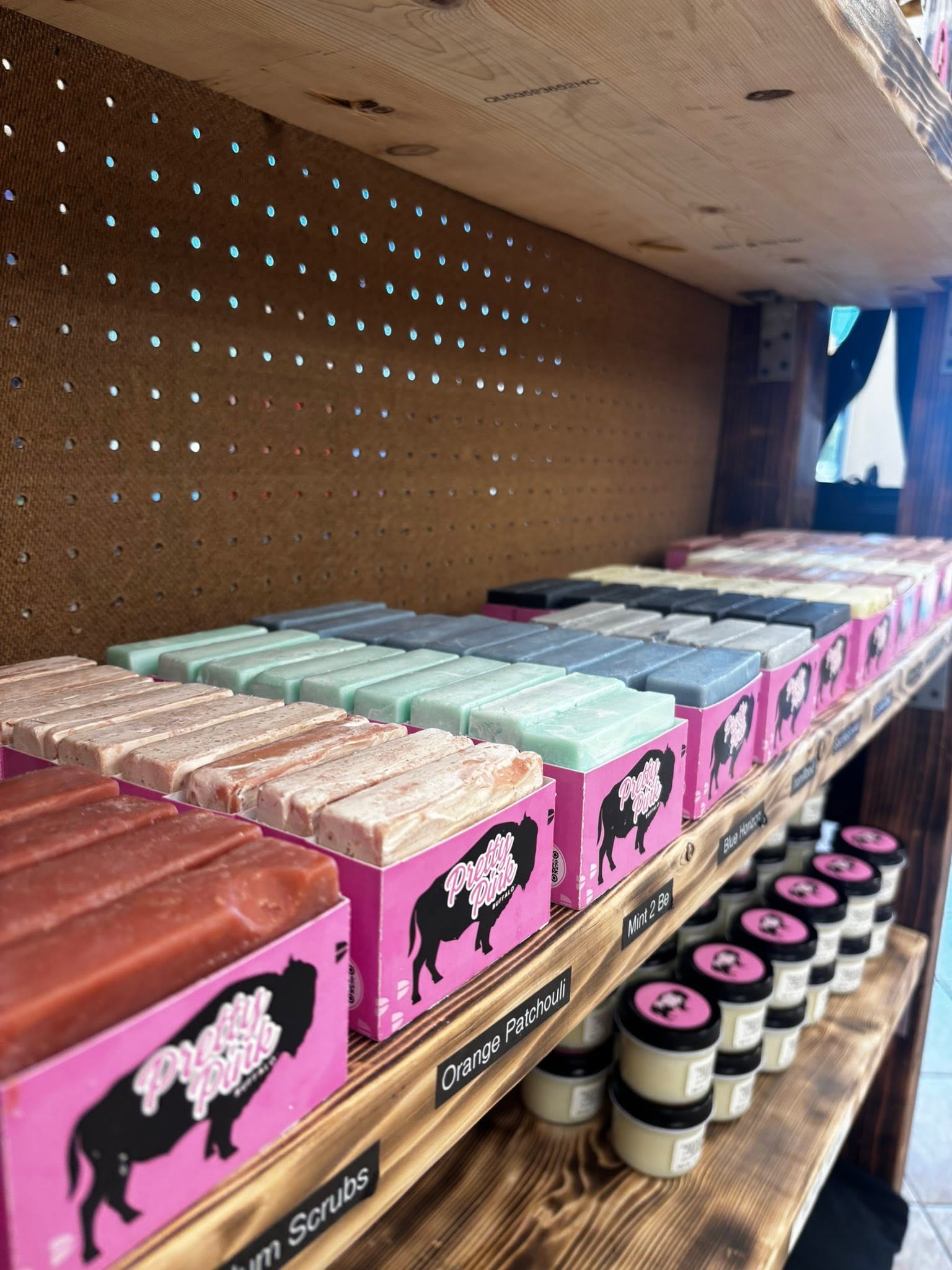
At Pretty Pink Buffalo, interns can follow an idea farther than most entry-level jobs allow. Buffalo tallow begins as a raw material connected to the larger Sacred Storm Buffalo food system. Through careful rendering, formulation, testing, making, packaging, and refinement, that material can become soap and other small-batch products.
The workforce lesson is bigger than learning a recipe. Interns get to see how research and development actually works: start with a question, study ingredients and processes, make a controlled batch, document what happened, evaluate the result, adjust the formulation or process, and try again.
Rendering teaches process discipline
Rendering tallow requires patience and attention. Temperature, cleanliness, handling, filtering, storage, and consistency all matter. Those habits translate directly into manufacturing and production environments where quality depends on following a process and noticing when something is not right.
Soap making connects science and craft
Soap making adds another layer of learning. Participants work with measurements, batch records, safe handling procedures, molds, curing time, labeling, packaging, and quality checks. The goal is not simply to make an item. It is to understand how repeatable production turns a handmade experiment into a product that can responsibly enter the marketplace.
Research and development opens the entrepreneurial door
New product development asks young people to think like researchers and entrepreneurs at the same time. Who is the product for? What problem is it intended to address? Which ingredients fit the brand and its values? What does each batch cost? How should it be packaged? What feedback is useful? Can the process scale without losing quality?
Pretty Pink Buffalo describes its products as small-batch and locally made through Wambli Ska’s workforce development initiative. That creates a learning environment where whole-animal use, sustainability, product design, branding, manufacturing, and retail can meet in one pathway.
This is Native economic ecosystem building at a very practical scale. Value that once left the system can stay in the system longer: the buffalo supports food, the tallow supports new products, the products support work experience, and the work experience can grow future makers, researchers, managers, and entrepreneurs.
Learn more
Pretty Pink Buffalo · Sacred Storm Buffalo · Wambli Ska Community Development Society · NWTAC
Request Technical Assistance →